
A team of marine researchers have taken the first ever photographs of the wreck of Shackleton’s last ship Quest, 1000 feet down in the Labrador Sea. Quest Chronicle author Jan Chojecki was on the “2026 Heroic Age Expedition”, a partnership between the Royal Canadian Geographical Society (RCGS) and the Woods Hole Oceanographic Institution (WHOI).
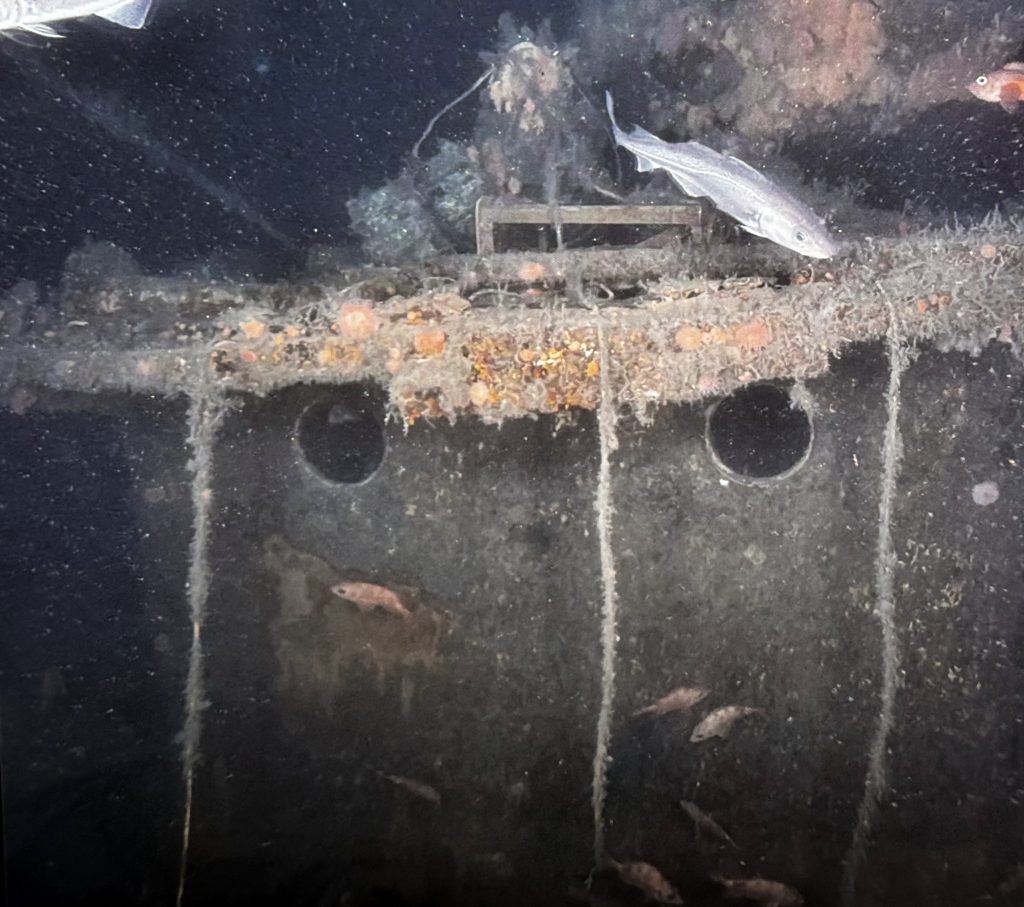
On 8 July, I found myself floating just a few inches off the deck of Quest staring at the distinctive pair of forward-facing portholes on the structure beneath the bridge. The ship is clearly recognisable despite having lain in 1,000 feet of water, in the Labrador Sea, for over 60 years. I was inside the submersible DSV Alvin – famed for its Titanic visits and many other deep-ocean exploits – now on its 5,358th dive. Just over two years previously I’d been on the surface above this spot on a mission organised by the Royal Canadian Geographical Society, that had just successfully located the Quest after an ingenious search.
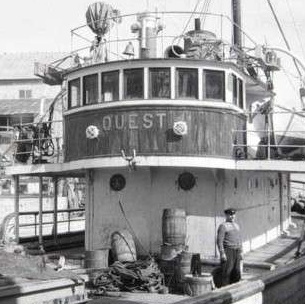
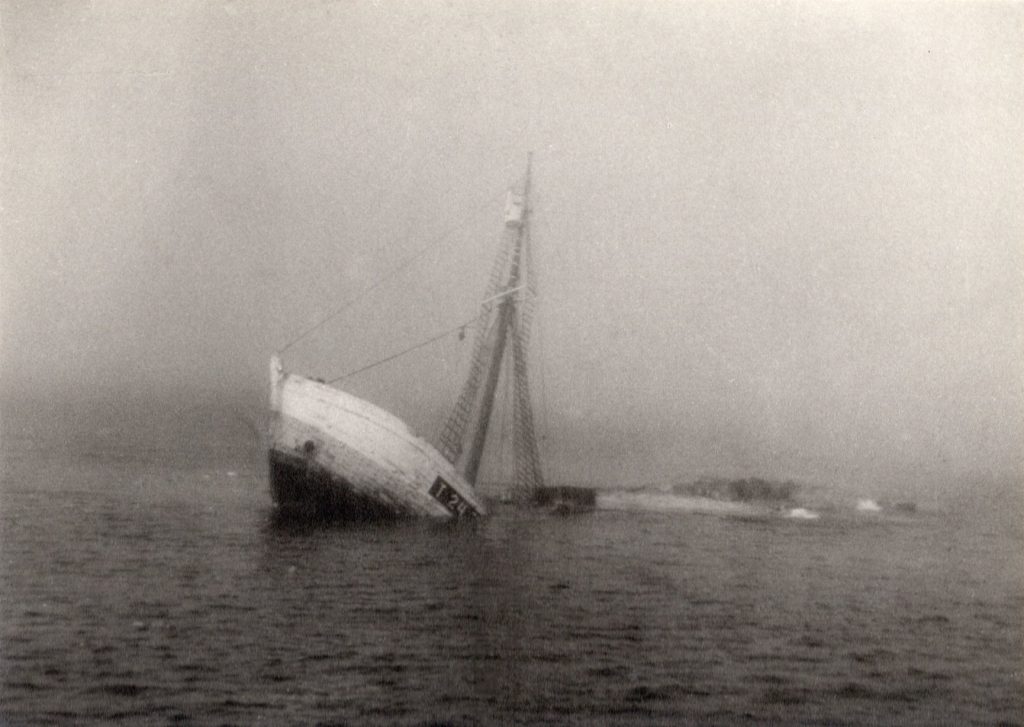
So, first, how did the Quest get here, on the seabed several miles off the coast of Canada’s Newfoundland? In September 1921, Sir Ernest Shackleton set sail from London aboard Quest on an expedition aiming to circumnavigate Antarctica over a two-year period, mapping navigable waters and uncharted islands, as a foundation for infrastructure – new routes, fuel depots, weather stations, wireless networks etc – to support the economy of the southern hemisphere. The Shackleton-Rowett expedition was financed by a school friend of Shackleton, the businessman John Quiller Rowett – my grandfather. After a catalogue of difficulties with the ship, and consequential changes of the expedition plan, Quest arrived at the whaling station of Grytviken, South Georgia, on 4 January 1922. That night, in the small hours, Shackleton died of a massive heart attack in his cabin on board Quest. In the weeks that followed there were some efforts to continue the voyage, but eventually my grandfather called the ship home. The full tale of this adventure is described in my book, The Quest Chronicle. In early 1924, my grandfather sold Quest back into Norwegian ownership, and the ship resumed its original existence as an Arctic sealer. This was interspersed with involvement in various Arctic ventures including Gino Watkins’ British Arctic Air Route Expedition (1930) and war service as a minesweeper. On May 5, 1962, during a seal-hunting mission off the coast of Newfoundland, her hull damaged by ice and her bilge-pumps overcome, the leaking Quest slowly disappeared beneath the waves, watched by the crew who had all been safely taken off onto accompanying sealing vessels.
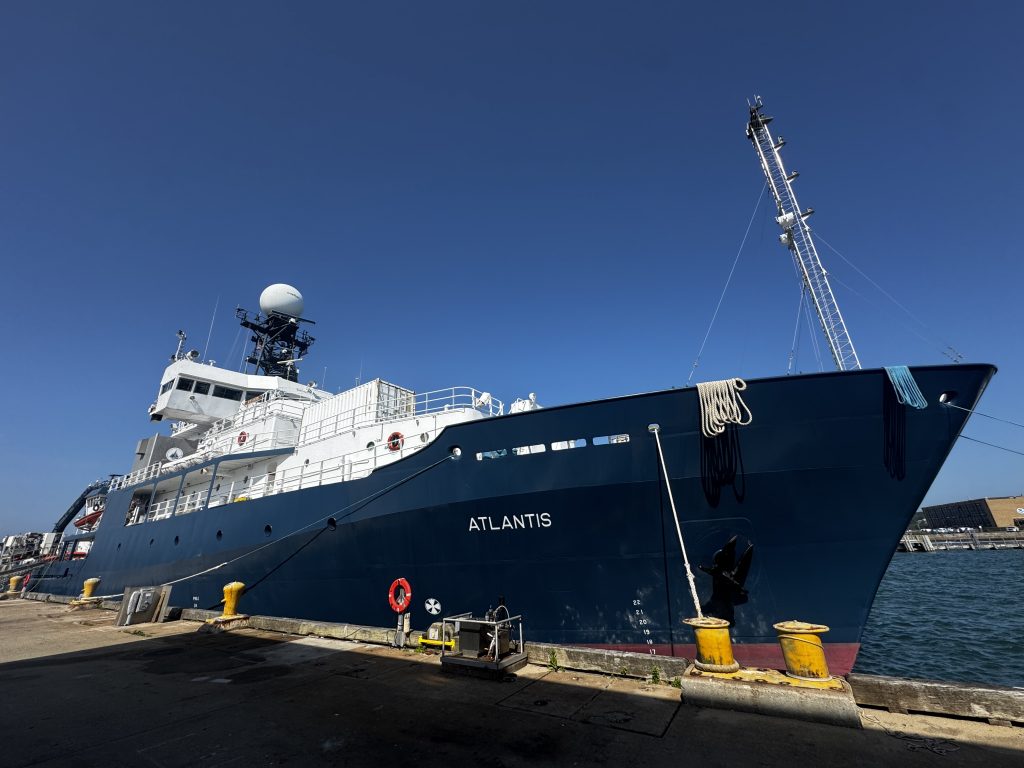
The RCGS mission in 2024 had discovered and pinpointed the wreck location but was able only to collect sonar side-scan images. So now, in July 2026, we were back and equipped with cutting edge technology to acquire high-definition photographic images in order to compile a three dimensional “digital twin” of the wreck, and to explore the immediate surroundings in detail for additional artefacts and debris. Once again, this was the initiative of the RCGS but this time in partnership with the Woods Hole Oceanographic Institution, operating from Research Vessel Atlantis. As well as deploying the deep submersible vehicle Alvin, which can carry three people to vast depths, RV Atlantis carries ROV Jason (remote operated vehicle) which can be equipped with leading technology for ocean research – including here the high-definition “photogrammetry” equipment, and associated software, made by Canadian company Voyis. The on-board science team also included marine biologists studying the fauna and flora colonising the wreck and archaeologists able to interpret the status of the structure.
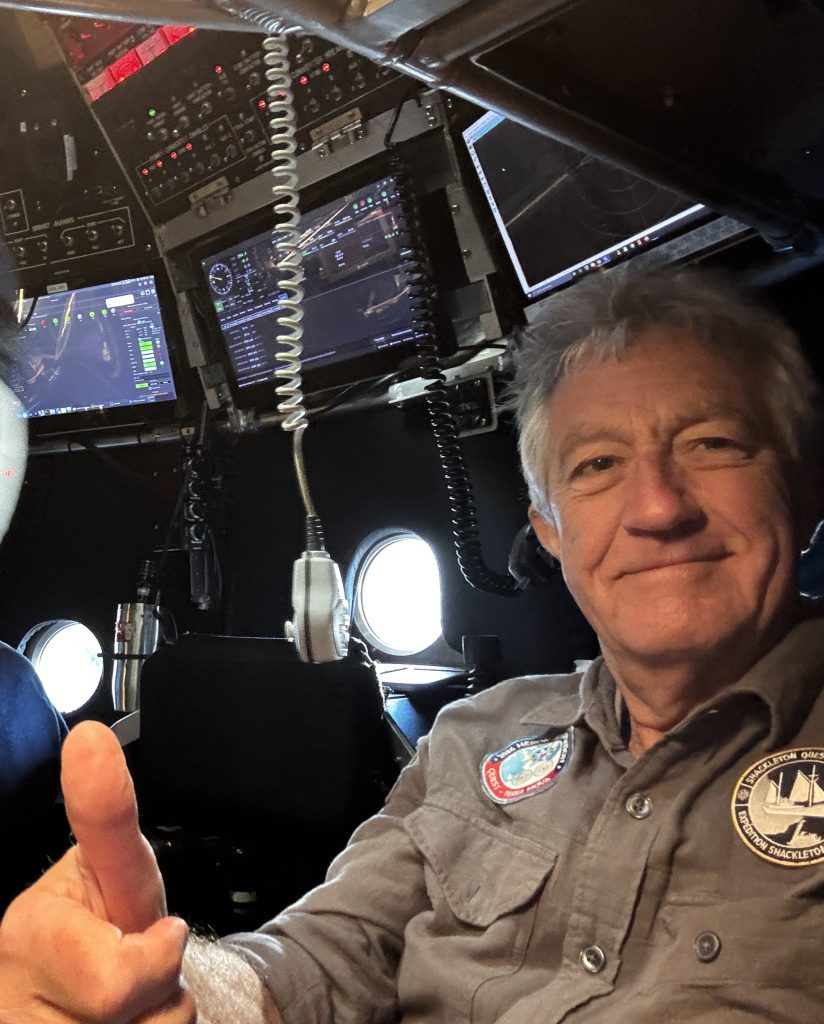
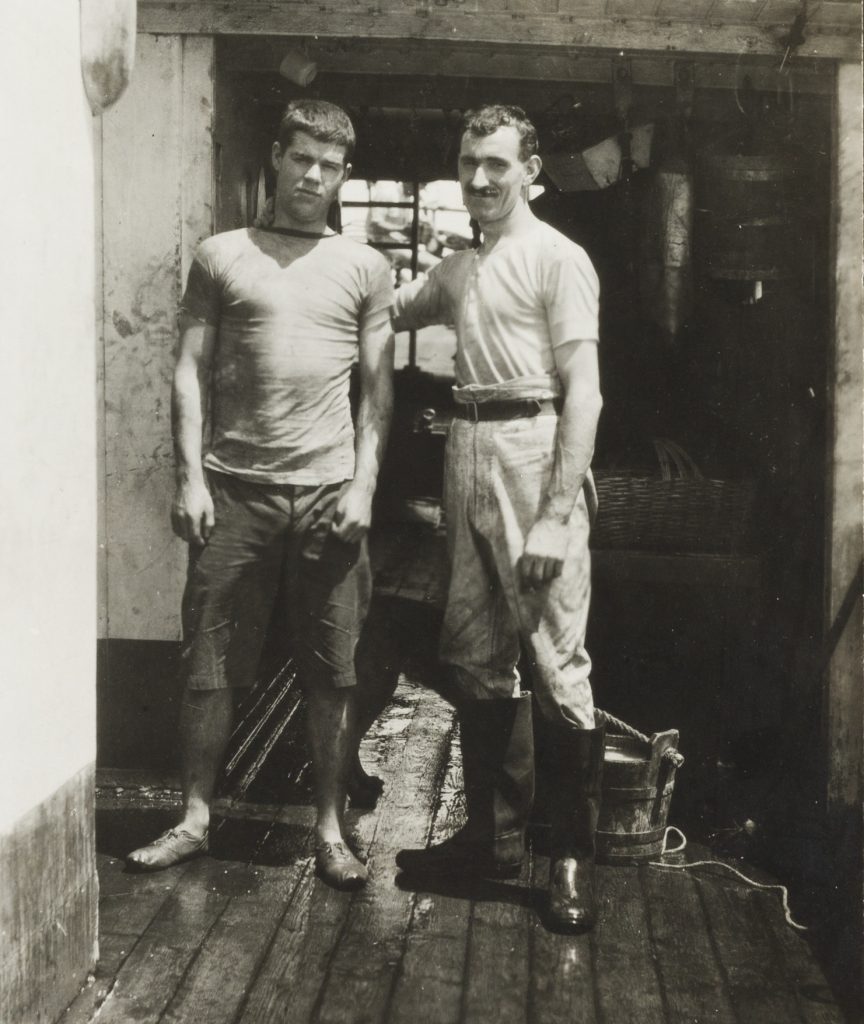
So here I was, amongst the very first to set eyes on Quest in over 60 years. Alvin held position just over, more or less, the spot on the deck where my grandfather and Shackleton had stood in 1921 inspecting the newly built deckhouse containing Shackleton’s quarters, full of hope for the forthcoming venture and little suspecting that the famous explorer would die in that very cabin just a few months later. The cabin itself had been removed to land-use after Quest was sold back to sealing, but having been wonderfully restored by Sven Haberman it is now on permanent display at the Shackleton Museum in Athy, Ireland, near the place of Shackleton’s birth. Although that cabin was long gone, the remains of the rest of the deck superstructure were unmistakable, now home to numerous fish of various kinds and a host of anemones and cold-water corals. This spot was also exactly where James Marr – whose story inspired the newly established ReQuest Foundation [LINK] – stood with Quest’s chef Charlie Green, on the way south in 1921.
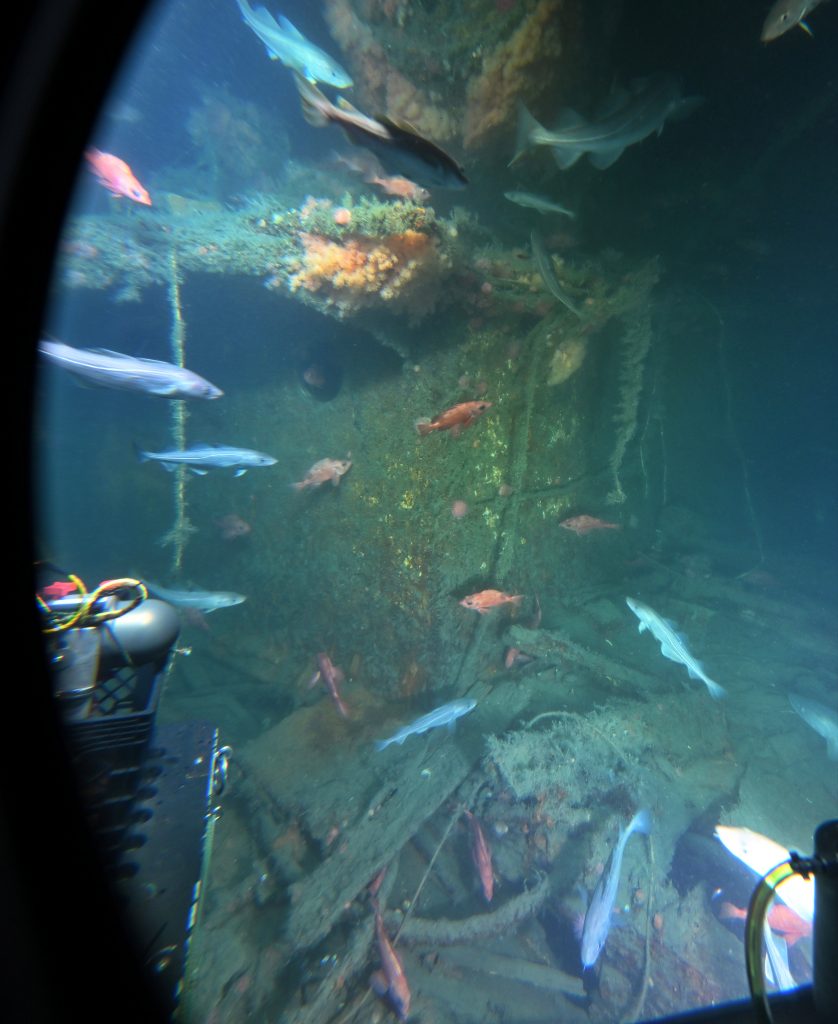
The wreck is slowly disintegrating. The funnel has fallen forward and the top section of the bridge – an aluminium housing that replaced the wooden wheelhouse that was constructed for Shackleton’s expedition – is missing altogether. It has possibly been dragged off after becoming snared by a trawl net. The stern section of the wreck is draped in a shocking quantity of snagged fishing gear. These images will perhaps serve to raise awareness of the global issue of lost fishing equipment – so-called “ghost nets” – and to catalyse thinking about remedial actions and policies, which very likely will be highly tailored to local situations.
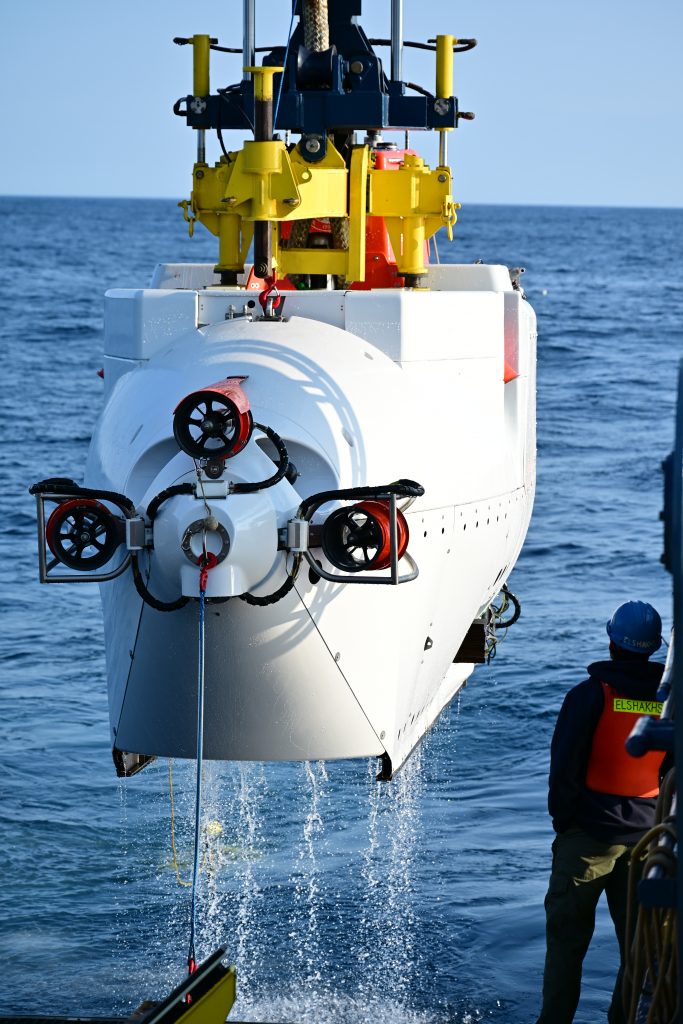
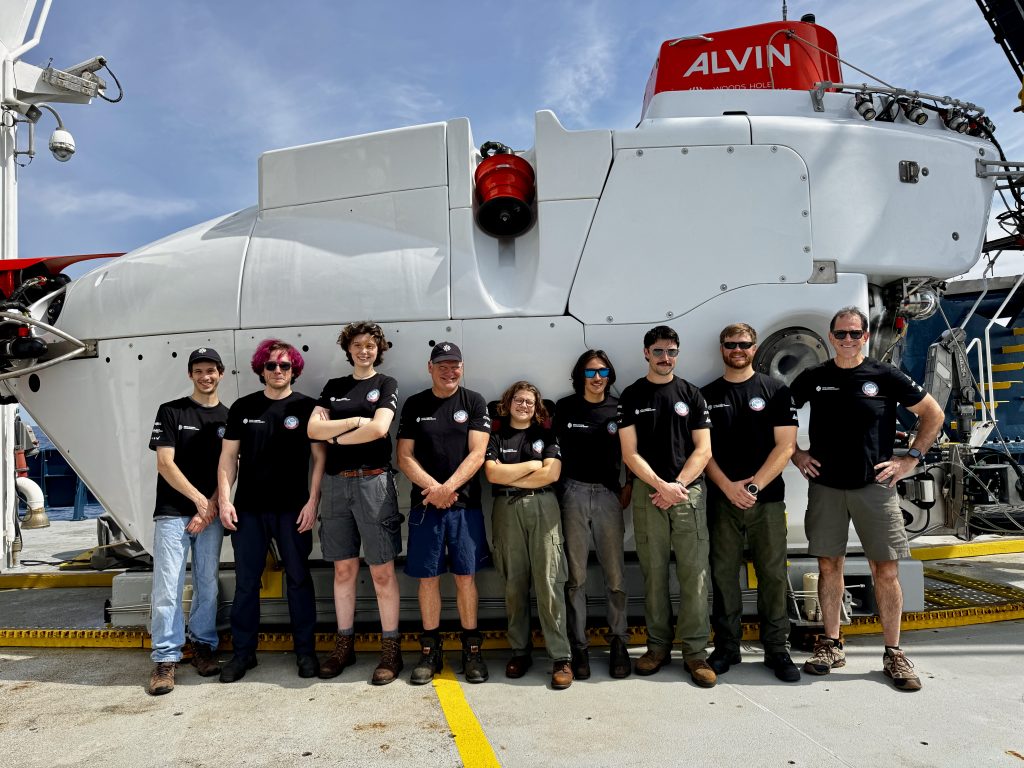
After several days surveying Quest, the Heroic Age Expedition continued northwards to a location off the southwestern tip of Greenland, where lies the wreck of another legendary ship of polar exploration, the Terra Nova. This famed vessel was used by Captain Robert Falcon Scott, for the 1910-11 British Antarctic Expedition, and had also served as a relief vessel on Scott’s first Antarctic expedition, with Discovery (1901-04). Scott was beaten to the South Pole by Amundsen and perished with his colleagues on the return journey. Here, we conducted Alvin dives by day and ROV photogrammetry by night to conduct the first detailed survey of Terra Nova. So, in the space of a couple of weeks, we have captured a vast amount of photographic material and related data to allow the detailed digital preservation of two of the most famous ships of the so-called Heroic Age of polar exploration. Both vessels are in advanced states of decay, but the digital record will remain as a permanent resource for scientists and historians alike. These images and the story of the 2026 Heroic Age Expedition will be released in various formats, including a documentary film, over the coming months.
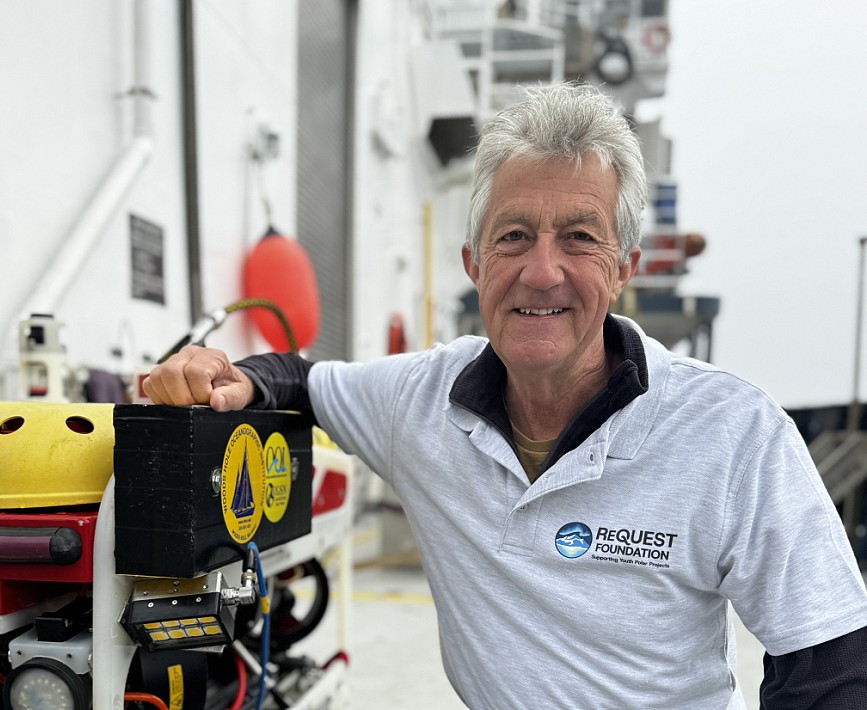
Jan Chojecki, August 2026
Click here for the RCGS video summary: https://m.youtube.com/watch?v=tQeVb2Hs9TQ&pp=iggCQAE%3D&ra=m
*****
Jan Chojecki is a founding trustee of the ReQuest Foundation and author of The Quest Chronicle – the story of the Shackleton Rowett Expedition (2022) www.questchronicle.org.uk
The Royal Canadian Geographical Society (RCGS) is a nonprofit organization founded in 1929 to “make Canada better known to Canadians and to the world.” More on RCGS and the Heroic Age Expedition: https://rcgs.org/about/news-releases/expedition-captures-first-images-of-ernest-shackletons-last-ship-quest-in-labrador-sea-using-cutting-edge-technology/
Woods Hole Oceanographic Institution (WHOI) is a private, non-profit organization dedicated to marine research, engineering, and higher education. Founded in 1930 and based in Cape Cod, Massachusetts, WHOI’s mission is to understand the ocean and its interaction with the Earth system, and to communicate the ocean’s vital role in the global environment.
The ReQuest Foundation is a new UK charity established to support young people (aged 16-24) to carry out polar projects – which can be research/scientific, creative/arts or exploration, of any kind, with a polar theme or relevance. Donations welcome as we grow our fund to meet our objects: PLEASE SUPPORT US : https://www.requestfoundation.org.uk/
The documentary film Shackleton’s Cabin can be watched at the BBC iPlayer https://www.bbc.co.uk/iplayer/episode/m001grr7/shackletons-cabin